
Blog
How to Design an Outdoor Learning Environment: A Zone-by-Zone Planning Guide for Preschools & Child Care Centers
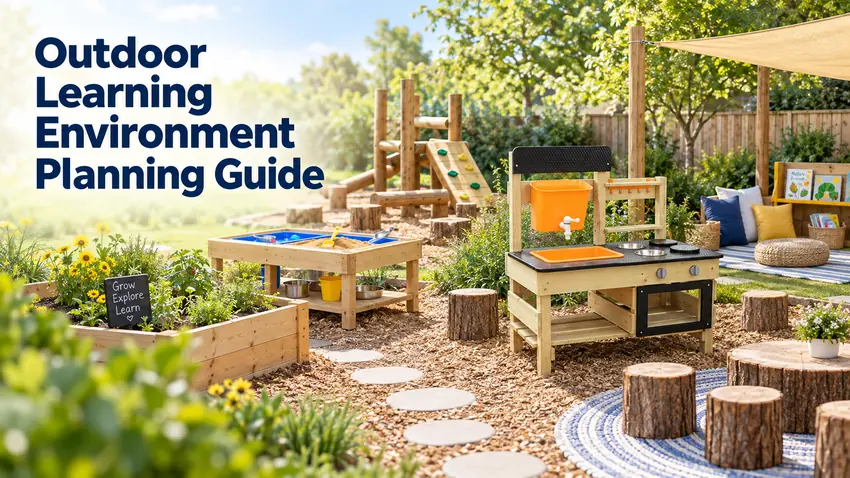
An outdoor learning environment is a second classroom, not a break from one. Centers that treat their outdoor space as a single all-purpose play yard tend to end up with a climbing structure, a stretch of mulch, and not much else — while centers that design outdoor space in distinct zones get measurably more instructional use out of the same square footage. This guide walks through how to plan an outdoor learning environment zone by zone, what belongs in each, and how to sequence the build if you’re working with a phased budget.
What Is an Outdoor Learning Environment?
An outdoor learning environment is a purposefully zoned outdoor space that supports the same range of developmental activities as an indoor classroom — gross motor, sensory, dramatic play, and quiet exploration — rather than a single open play area. The distinction matters because licensing bodies and accreditation frameworks increasingly evaluate outdoor space for program value, not just for physical safety, and a zoned design gives teachers a reason to plan outdoor time as instructional time rather than free play alone.
The Five Zones Worth Planning For
Most well-designed outdoor learning environments include five functional zones: gross motor, sensory/nature, dramatic play, quiet/reading, and a transition or gathering area. You don’t need all five built at once — sequencing them is covered below — but planning the full layout first prevents a later zone from being squeezed into whatever space is left.
- Gross motor zone. Climbing structures, balance elements, and open running space. This is usually the zone centers build first and the one licensing inspectors focus on most closely for fall-zone surfacing and equipment spacing.
- Sensory and nature zone. Sand and water tables, mud kitchens, planting beds, and loose natural materials (logs, stones, sensory bins). This is consistently the zone with the lowest cost-per-square-foot and the fastest program payoff, since it supports open-ended exploration with minimal fixed equipment.
- Dramatic play zone. An outdoor playhouse, stage, or prop station extends indoor dramatic play outside and gives teachers a second location to rotate materials into, reducing wear on indoor pieces.
- Quiet/reading zone. A shaded area with soft seating or a reading nook gives children (and teachers) a lower-stimulation option outdoors — a zone that’s frequently missing entirely in play-yard-style designs, and one accreditation reviewers increasingly ask about.
- Transition/gathering zone. A defined space near the door for lining up, putting on shoes, and group instructions. Skipping this zone is the single most common cause of bottlenecks during outdoor transitions.
Choose Equipment That Supports Each Learning Zone
Once the zones are mapped, select equipment based on the activity each space needs to support. Browse our outdoor learning products for age-appropriate equipment across the full environment. A sensory area can include sand and water activities, while an Outdoor Play Kitchen or outdoorED™ Market Stand can anchor dramatic and imaginative play. For a quieter space, the outdoorED™ Play House Cube provides children with a comfortable place for reading, reflection and lower-stimulation activities.
Sequencing the Build When Budget Is Phased
If you can’t build all five zones at once, sequence gross motor and sensory/nature first, dramatic play and transition space second, and quiet/reading last — in that order, based on which zones see the heaviest daily use and which carry licensing or safety requirements that are harder to retrofit later (surfacing and equipment spacing in particular). Plan the full footprint on paper from day one even if you’re building in phases; retrofitting a zone into a space that wasn’t reserved for it is consistently more expensive than building it as part of the original layout.
What to Check Before You Order Equipment
- Fall-zone surfacing and equipment spacing. These are the two most commonly cited items in licensing and safety inspections, and they need to be planned before equipment is selected, not after.
- Age-appropriate equipment grading. Outdoor equipment is graded by age range in the same way indoor furniture is — a piece designed for 5-to-12-year-olds doesn’t meet safety expectations for a mixed 2-to-5 preschool group, even if it fits the space.
- Shade and drainage. Both affect how many hours a day a zone is actually usable, which directly affects the return on what’s spent building it.
- Material durability for your climate. Outdoor equipment sees far more weather exposure than anything indoors; materials rated for your region’s freeze/thaw or UV exposure will outlast lower-cost alternatives built for milder climates.
Frequently Asked Questions
What is an outdoor classroom?
An outdoor classroom is an outdoor space intentionally designed to support instructional activities — sensory play, gross motor development, nature exploration, and quiet reflection — rather than serving only as a free-play area. It’s typically organized into distinct zones so teachers can plan and rotate activities the same way they would indoors.
How much outdoor space does a preschool need per child?
Licensing requirements for outdoor space per child vary by state, so the exact square footage should be confirmed against your state’s specific child care licensing regulations before finalizing a design — this is one of the few figures in outdoor planning that isn’t consistent nationally.
What should go in an outdoor learning space first if the budget is limited?
Gross motor equipment and a sensory/nature zone (sand, water, or a simple mud kitchen) deliver the most program value per dollar early on, since they require the least fixed infrastructure and see the heaviest daily use once built.
Do outdoor play areas need the same safety certifications as indoor furniture?
Outdoor equipment has its own age-grading and safety standards distinct from indoor furniture certifications, and fall-zone surfacing requirements are specific to outdoor installations — always confirm current equipment and surfacing standards with your supplier and your state licensing agency rather than assuming indoor certifications carry over.