
Blog
Making Room for Kindness: Classroom Spaces That Encourage Caring and Cooperation
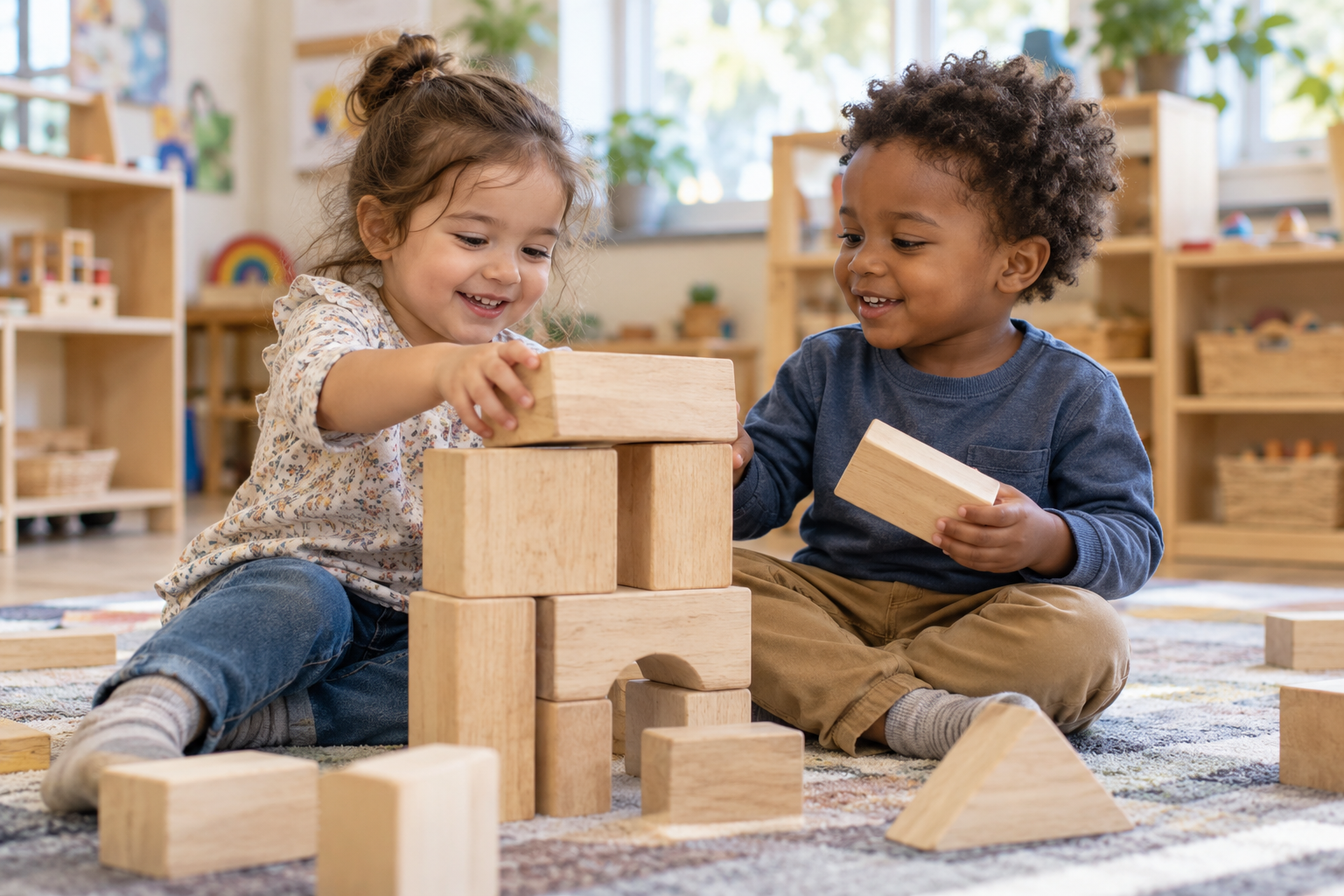
Kindness grows through everyday moments. A child makes room for a friend at the art table. Two toddlers work together to build a tower. A preschooler notices that someone needs a quiet place to take a break.
Teachers help guide these interactions, and the classroom environment can support their work. Thoughtful child care classroom design gives children opportunities to connect, solve problems, and care for their shared space.
You don't need a complete classroom makeover to get started. Small changes to furniture placement, materials, and daily routines can make room for more caring and cooperation.
Create a Space to Play Together
Look at your classroom from a child's perspective. Is there room to join an activity? Can two children comfortably reach the same materials? Do crowded pathways interrupt play?
Arrange learning areas so children can participate together while teachers maintain clear sightlines.
Consider:
- Small-group tables where children can talk, create, and work side-by-side.
- An open block area with enough floor space for a shared building project.
- Accessible shelves that let children find and return materials independently.
- Clear pathways that allow children to move through the room without stepping into another child's activity.
Keep quieter activities away from busy movement areas when possible. A comfortable space makes is easier for children to stay engaged with one another.
Choose Materials That Invite Cooperation
Some materials naturally give children a reason to work together. Blocks, pretend-play props, and open-ended art supplies allow children to contribute their own ideas to a shared activity.
Try offering:
- Building materials for creating a neighborhood, bridge, or animal home.
- Dramatic play furniture and props for a pretend restaurant or family meal.
- Puppets for acting out friendship situations.
- Large sheets of paper for collaborative artwork.
Choose activities that match the children's ages and abilities. For younger children, playing alongside a peer and exchanging a toy can be meaningful practice.
Provide duplicates of frequently used items. Children are still learning to wait and take turns, and every activity does not need to become a sharing challenge.
Explore dramatic play furniture
Make Belonging Part of the Room
A caring classroom helps each child feel recognized. Look for everyday ways to reflect the children and families who use the space.
Display family photos at children's eye level. Include books, dolls, and pretend play materials that represent different cultures, abilities, and family structures. Add home languages to labels where they are meaningful to your classroom community.
Invite families to share what matters to them. Their input can help you choose materials that feel familiar and introduce children to experiences beyond their own.
Belonging also means being able to participate. Consider whether children can reach materials, approach activity areas, and find seating that supports their needs.
Offer a Comfortable Place to Pause
Caring for others starts with learning to recognize and manage your own feelings. A calm-down space gives children a place to pause with teacher support when the classroom feels overwhelming.
Keep it visible, accessible, and welcoming. Depending on the ages in your care, it might include:
- Comfortable, age-appropriate seating.
- A small selection of books about feelings.
- Simple emotion pictures or calming prompts.
- Suitable sensory materials selected for the children using the space.
Introduce the area during a calm moment so children understand how to use it. Teachers can model language such as, "You look frustrated. Let's sit together for a minute."
The space should offer support and connection, never serve as punishment.
Explore cozy seating, book displays, and nooks
Make Caring for the Classroom Easier
Cooperation happens during cleanup, snack time, and transitions as well as play. Set up the room so children can take part in caring for it.
Picture labels on bins help children see where materials belong. Low storage gives them access to everyday supplies. Clearly defined activity areas make cleanup tasks easier to understand.
Offer manageable jobs, such as returning books, putting blocks in a basket, or helping set out napkins. Adjust responsibilities to each child's abilities and provide help when needed.
Use specific language to connect the action with its impact: "You put the puzzle pieces back so our friends can find them next time."
Explore classroom storage, cubbies, and organizers
Let Teachers Bring the Space to Life
Furniture and materials create opportunities. Teachers help children learn what to do with them.
Model how to invite someone into play, ask for a turn, and respond when a friend is upset. Notice caring actions without expecting children to get everything right.
A few useful phrases:
- "Would you like to help us build?"
- "You both want the truck. Let's work out a plan."
- "She said she needs some space. We can give her room."
- "You helped pick that up. Now our walkway is clear."
Start with one area where children regularly need support. A better shelf arrangement, more room for shared play, or a comfortable place to pause may be a useful first step.
Frequently Asked Questions
How can classroom design encourage kindness in child care centers?
Classroom design can make positive interactions easier by providing room for shared play, accessible materials, and comfortable places to connect. Teachers reinforce kindness by modeling caring language and helping children work through everyday challenges.
What classroom materials encourage cooperation?
Blocks, dramatic play props, puppets, and shared art materials offer opportunities to exchange ideas and work together. Select materials for the children's ages and abilities, and provide enough supplies to keep participation manageable.
How can we encourage cooperation in a small classroom?
Start by reviewing furniture placement and removing unnecessary clutter. Keep pathways clear, use accessible storage, and create a few comfortable areas where small groups can play together. Watch how children use the room before deciding what to change.
Should a calm-down space be separate from the classroom?
A calm-down space can be within the classroom, positioned away from the busiest activity while remaining visible to teachers. Children should be able to receive supervision, reassurance, and help using the space.
Make Room for Everyday Kindness
The most useful classroom changes support the moments your children and teachers experience every day. Start small, observe what happens, and adjust as your classroom needs change.
North Star School Supply can help you plan welcoming spaces and select furniture and learning materials that support your daily routines. Whether you're refreshing one area of furnishing a new center, we're here to help.