Blog
The Preschool & Daycare Classroom Furniture Buying Guide: What to Specify Before You Order
If you’re choosing preschool and daycare classroom furniture or furnishing a daycare center, the fastest way to overspend is buying furniture the way you’d buy for a home: mainly by how it looks in a catalog photo. Commercial-grade classroom furniture is a 10-to-20-year purchase, not a five-year one, and the specs that matter — weight rating, certification, modularity, and how a piece holds up to 20 toddlers a day — rarely show up in a product photo. This guide walks through exactly what to check before you place an order, in the order it actually matters for budget and safety.
Start With Your Room’s Program, Not a Product List
The first decision isn’t which chair to buy — it’s what kind of classroom you’re building. A Montessori-style room built around open shelving and child-accessible materials needs different furniture than a traditional circle-time layout with a teacher-directed centers model. Furniture bought before the room’s daily flow is mapped tends to get rearranged, boxed up, or replaced within a year.
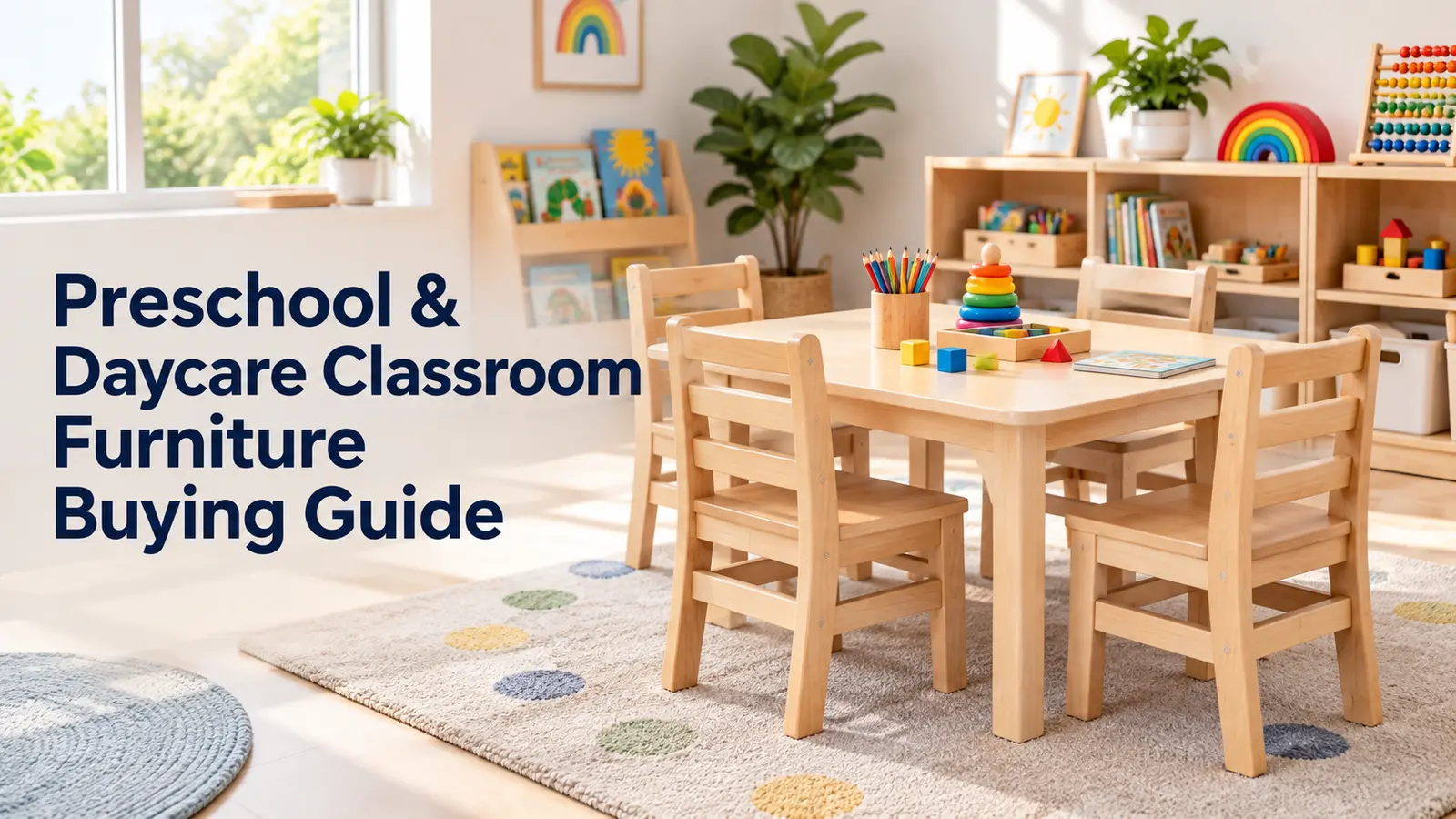
Begin by selecting appropriately sized classroom tables, seating and accessible storage based on the room’s age group and daily activities.
Before you open a catalog, walk through your actual day: How many transitions happen between centers? Where do children put on and take off shoes, coats, and bags? Does nap time share space with another activity? Answering this first turns a furniture order into a room plan, and it’s the difference between furniture that gets used daily and furniture that becomes storage-room clutter by month six.
What to Specify for Every Piece
Four things belong on every classroom furniture spec sheet: certification, weight/load rating, age-grading, and cleanability. Skipping any one of these is how centers end up with furniture that fails a licensing inspection or a surface that can’t be sanitized between groups.
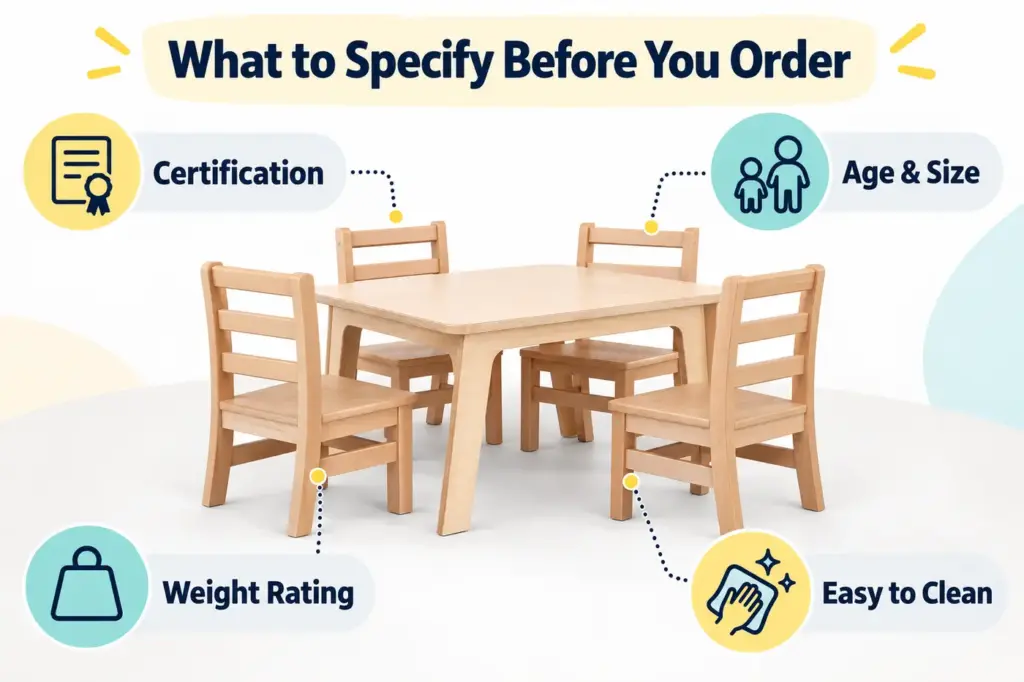
- Certification. Look for GREENGUARD Gold certification, which specifically screens for low chemical emissions and is widely recognized for furniture used in schools and child care settings — it matters more here than in a typical office purchase because young children spend hours a day in close contact with the material.
- Age-grading and sizing. Table and chair heights are graded to age bands (commonly infant/toddler, 2-3s, 3-5s, and school-age); a chair that’s the wrong height by even 2 inches changes posture, table engagement, and how long a child stays seated for an activity.
- Weight rating and construction. Commercial-grade furniture is rated for repeated daily use by groups of children climbing on, standing on, and dragging pieces across a floor — residential-grade furniture isn’t built for that load cycle and shows it within a year.
- Cleanability. Non-porous, wipeable surfaces (laminate, sealed hardwood, powder-coated metal) that tolerate daily disinfecting without degrading are a licensing-inspection requirement in most states, not just a nice-to-have.
Priority Order for Budget Allocation
When budget is limited, buy tables and chairs first, core storage second, and soft/specialty furnishings last. This order reflects both daily wear and licensing requirements:
- Tables and chairs — highest use, highest wear, and the pieces most directly tied to daily program function. Buy commercial-grade here even if it means waiting on other categories.
- Core shelving and storage — open shelving units that hold materials at child height are foundational to most early-childhood program models and get used every single day.
- Age-specific pieces — cots or cribs, changing tables, and infant-specific furniture where applicable; these often carry their own regulatory requirements (see our infant classroom setup guide for specifics).
- Soft furnishings, dramatic play furniture, and outdoor pieces — still important for a complete learning environment, but these can reasonably be phased in over a budget cycle or two without disrupting daily operations.
A useful rule of thumb we hear from directors: the most expensive furniture you’ll ever buy is the furniture you have to replace in year two. Buying commercial-grade once, in the right order, costs less over a decade than buying budget-grade twice.
Find the Right Furniture for Your Classroom
Once you know which items to prioritize, explore our Preschool and Daycare Classroom Furniture to compare age-appropriate tables, chairs, storage units and other classroom essentials. Choose each piece based on your children’s age group, available space and daily activities—not appearance alone.
Questions to Ask Before You Order
Before finalizing a purchase order, get clear written answers on:
- What’s the warranty period, and does it cover structural failure or only manufacturing defects?
- Is delivery threshold (curbside vs. room-of-choice) and assembly included, or billed separately?
- What’s the realistic lead time, especially for made-to-order or customized pieces?
- Can the supplier provide a room layout or space plan alongside the quote, or is that a separate service?
A supplier that can answer all four without hedging is usually one that regularly works with schools and centers rather than general office furniture buyers — that distinction matters more than price alone.
Once you have confirmed the required dimensions, certifications and delivery conditions, compare suitable preschool classroom tables, child-size chairs and classroom storage solutions for your room.
Ready to plan your classroom? Explore North Star School Supply’s classroom furniture or contact our team for help selecting tables, chairs and storage suited to your children’s age group, room dimensions and program. Shop Now →
Frequently Asked Questions
How long does classroom furniture last?
Commercial-grade classroom furniture from an established manufacturer is typically built for a 15-to-25-year service life under daily classroom use, compared to a fraction of that for residential-grade furniture used in the same setting.
What certifications should I look for in classroom furniture?
GREENGUARD Gold certification is the most relevant credential for indoor air quality in schools and child care settings — it verifies low chemical emissions from the materials and finishes used. Beyond that, check that infant-specific items (cribs, changing tables, high chairs) meet current federal and state safety standards for those product categories specifically, since general furniture certifications don’t automatically cover them.
What’s the real difference between commercial-grade and residential-grade furniture for a daycare?
Commercial-grade furniture is built and tested for continuous multi-user daily cycling — repeated climbing, dragging, and group use — while residential-grade furniture is designed around occasional single-family use. The visible difference is often small; the difference in how long it survives a classroom is not.
How much should a preschool budget for classroom furniture?
Costs vary widely by room size, age group, and how much is being built from scratch versus refreshed, which is why most established suppliers quote per-room rather than publish flat pricing. Budgeting in the priority order above (tables/chairs → storage → age-specific → soft furnishings) lets a center phase spending across more than one budget cycle without leaving a room half-furnished.