
Blog
25 Classroom Storage & Organization Ideas for Preschool and Daycare Rooms
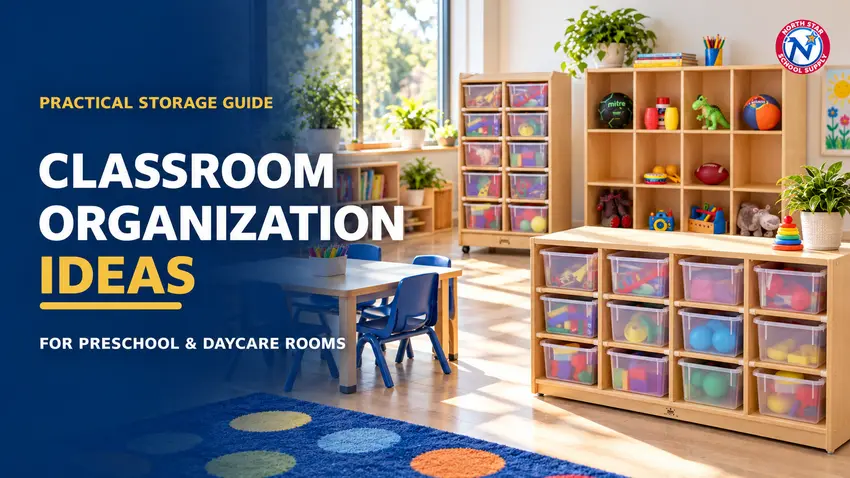
Classroom Organization Ideas for Preschool and Daycare Rooms
Most classroom organization ideas online are written by individual teachers solving problems in their own rooms. These ideas can be useful, but they are often built around furniture purchased for one classroom rather than the commercial-grade storage an entire preschool or childcare center needs to standardize across multiple rooms.
This guide covers both sides of the process: the organizing principles that help a preschool or daycare classroom function smoothly each day and the storage furniture needed to ensure the system holds up under continuous group use instead of falling apart by October.
The Three Classroom Organization Principles That Matter Most
Classroom storage works best when materials are visible, clearly labeled and reachable by children without adult help. Everything else is a useful addition, but these three principles form the foundation of effective classroom organization.
Centers that struggle with daily cleanup can often trace the problem back to one of the following areas:
- Visibility: Closed bins and opaque cabinets hide what is inside. As a result, children cannot independently select materials, and teachers must repeatedly retrieve supplies for them. Open shelving and clear or clearly labeled bins solve this problem at the source.
- Labeling: Picture labels, rather than text-only labels, allow pre-readers to return materials to the correct place independently. This simple change can turn “the children never clean up” into a classroom that largely organizes itself after each activity.
- Reachability: Child-height storage is more than an educational philosophy—it is the practical reason self-directed selection and cleanup work. Anything stored above a child’s eye level automatically becomes teacher-only storage.
These classroom organization ideas support independence while making daily transitions and cleanup easier for teachers.
Classroom Organization Ideas by Room Zone
Different areas of a classroom require different storage solutions. Using the wrong type of storage in a particular zone is one of the most common classroom organization mistakes.
- Centers and activity areas need open shelving with labeled bins. A low, open toddler classroom storage shelf keeps toys, books and learning materials visible and within children’s reach.
- Cubbies and personal storage areas need individual, clearly labeled compartments. A 12 Cubby Backpack Storage Cabinet gives each child a defined place for backpacks, lunch boxes, shoes and personal belongings.
- Teacher and administrative storage can be closed and positioned higher on the wall or inside secure cabinets. In this area, adult-only access is intentional rather than a disadvantage.
- Rotation storage for materials that are not currently being used works best with labeled containers. A 12 Tray Mobile Storage Cabinet combines clear removable trays with casters, making stored materials easier to identify and move between classroom zones.
Organizing storage by room zone creates a consistent system that both teachers and children can understand.
What to Buy: Commercial-Grade Classroom Storage
Durability is the main difference between commercial classroom storage and a residential organization system. Choose furniture designed for continuous, multi-child daily use rather than shelving intended for occasional home use.
When evaluating storage furniture for a preschool or daycare room, consider the following:
- Open shelving units: Select shelves that accommodate standard classroom bins so containers can slide in and out without catching. Mismatched shelf and bin dimensions are a surprisingly common source of daily frustration.
- Mobile storage units: Storage furniture fitted with locking casters can move between storage and activity configurations throughout the day. This is particularly useful in flexible classrooms and multipurpose learning spaces.
- Age-appropriate cubby units: Cubby dimensions should match the age group using them. Toddler cubbies require lower hooks and shorter compartments, while pre-K cubbies may need enough space for backpacks, lunch boxes and coats.
- Non-toxic, wipeable finishes: Any storage unit within children’s reach should have a durable, easy-to-clean finish. Classroom furniture will be touched frequently, climbed on and occasionally used as a step stool regardless of its intended purpose.
Match Storage to Your Classroom Layout
The best classroom organization ideas match each storage unit to the available space and daily routine. Explore our classroom storage collection to compare child-height shelving, cubbies, tray cabinets and mobile organizers.
For a smaller classroom, the 12 Cubby Storage Cabinet provides configurable storage with removable dividers. In an entry or transition area, a 10 Section Wall Mount Coat Locker with Storage combines coat hooks, cubby openings and overhead storage in one unit.
Classroom Organization Ideas That Don’t Require New Furniture
Not every classroom organization improvement requires purchasing new furniture. Labeling, material rotation and clearly defined zones can solve many storage problems without changing the existing classroom setup.
Try these practical, low-cost improvements:
- Photograph each shelf and bin in its correctly organized state and display the photograph nearby. A visual reference can work faster than a written label in mixed-age or multilingual classrooms.
- Rotate approximately one-third of classroom materials out of sight every few weeks. This keeps the number of available choices manageable instead of placing everything the center owns on the shelves at once.
- Color-code materials by activity area rather than by age group. This allows a sensory, literacy or block-area labeling system to remain consistent as children move between classrooms.
- Give each cubby section a single, consistent purpose during transitions. For example, designate one area for shoes and another for bags rather than treating the cubby as one undifferentiated storage space.
These classroom organization ideas can improve daily routines immediately while helping a center identify where new storage furniture is genuinely needed.
If your organization project is part of a larger classroom update, review our Preschool and Daycare Classroom Furniture Buying Guide before selecting new furniture. Centers that need help evaluating storage, classroom flow and learning areas can also request a free classroom readiness assessment.
Frequently Asked Questions About Classroom Organization
What are the best classroom organization ideas for a preschool?
The most effective approach combines open, labeled and child-height storage in activity areas with individually labeled personal cubbies. Closed or higher storage should be reserved for teacher and administrative materials. Visibility, labeling and reachability—not one specific product—are what make the system work.
How do you organize classroom supplies without creating clutter?
Rotate materials instead of keeping everything accessible at once. Keep the current selection visible and store approximately one-third of the materials in clearly labeled containers out of sight. This keeps shelves manageable and prevents the “too much to choose from” clutter that can build up during the school year.
What storage furniture does a preschool classroom need?
At minimum, a preschool classroom needs open shelving sized for standard bins, individual cubby units suited to the children’s age group and secure closed storage for teacher and administrative materials. Furniture should be commercial-grade and designed for continuous multi-child use.
How often should classroom materials be rotated?
A common practice is to rotate approximately one-third of the available materials every few weeks. This keeps classroom shelves manageable and renews children’s interest in materials that were previously stored away without requiring additional purchases.
Creating a Classroom Organization System That Lasts
The most successful classroom organization ideas are simple enough for children and teachers to follow every day. Start with visible materials, picture labels and child-height storage, then choose commercial-grade shelving, cubbies and mobile storage that can maintain the system through years of daily classroom use.