
Blog
Making Room for STEAM and Sensory Play in Your Early Learning Classroom
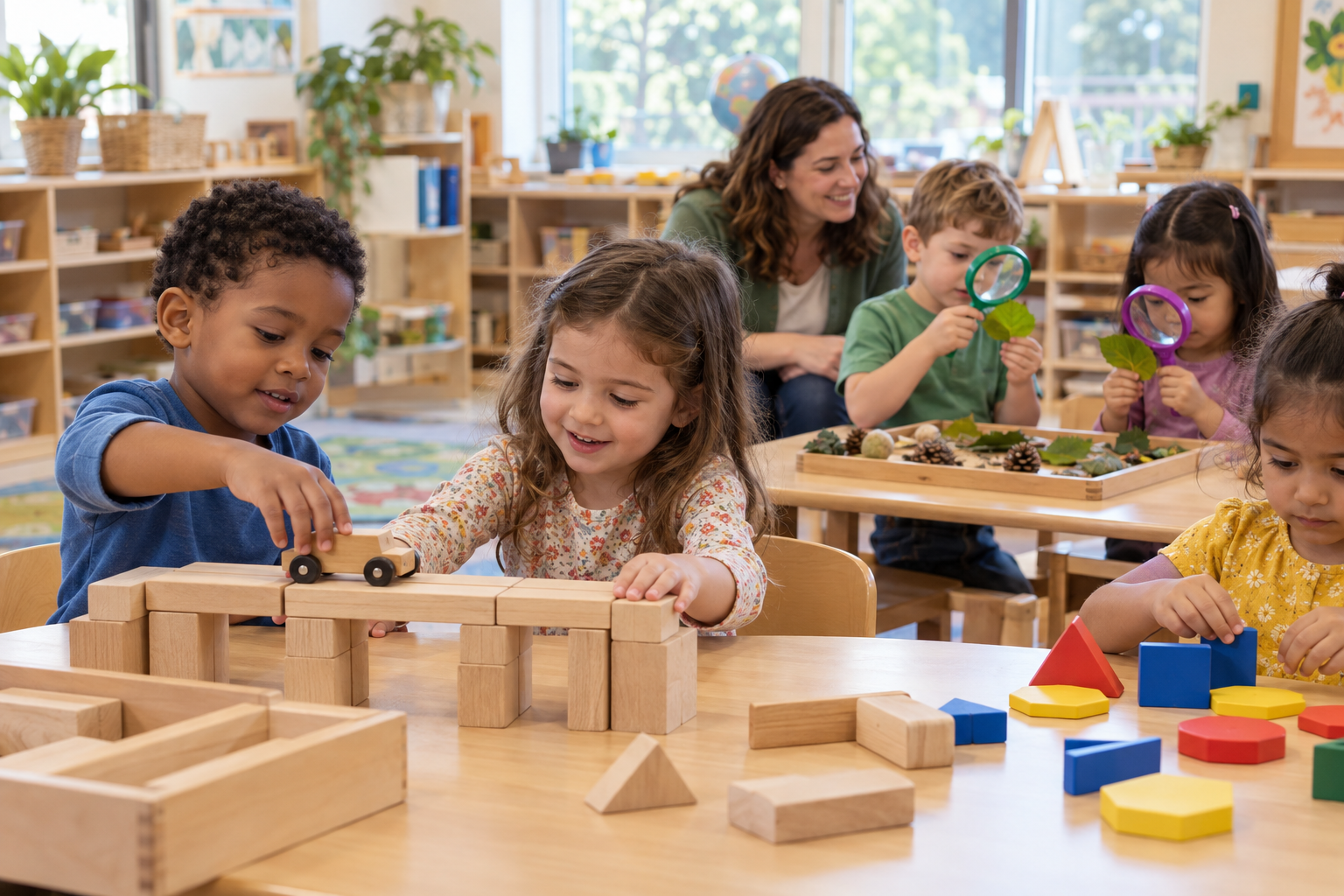
When you’re planning a classroom, there’s a lot to consider. Furniture, storage, learning materials, and budget all need attention. STEAM and sensory play materials belong in that conversation from the start.
Children explore big ideas through small, everyday moments: building a tower, pouring water between containers, or noticing how a ball moves down a ramp. These experiences give them opportunities to ask questions, try something new, and learn through play.
You don’t need a dedicated lab or a long shopping list to make room for that kind of learning. A thoughtful selection of materials and a space that works for your teachers and children can be a great place to start.
What STEAM Looks Like in an Early Learning Classroom
STEAM stands for science, technology, engineering, art, and math. In an early learning classroom, these ideas often show up naturally during play.
A child stacking blocks is exploring balance and structure. Mixing paint invites experimentation with color. Scooping water into different containers creates opportunities to compare amounts and talk about what changes.
Simple tools are part of STEAM, too. A magnifying glass helps children look more closely, while a ramp lets them test how things move.
The goal is to give children room to explore their ideas. Open-ended materials can be used in different ways, allowing an activity to grow with their interests and abilities.
Choosing Materials for Your Classroom
Start with materials that fit the ages of your children, the space you have, and the activities your teachers want to offer. These categories can help you plan a useful mix.
- Building and construction. Unit blocks, age-appropriate magnetic tiles, and ramps invite children to build, test, and try again. A tower that tips over can become an opportunity to ask, “What could we change to help it stand?”
- Cause-and-effect. Gears, water wheels, and rolling activities help children explore what happens when they take an action. Teachers can extend the experience with questions such as, “What do you think will happen if we make the ramp higher?”
- Sensory exploration. Sand and water tables, washable textured materials, and tactile materials offer different ways to explore. Choose materials suited to the children using them, follow product age guidance, and plan for supervision and cleaning.
- Art and creative exploration. Paper, crayons, paint, clay, and age-appropriate collage materials give children ways to create and express their ideas. Art can connect with other activities, too. Children might draw a structure before building it or paint something they observed outdoors.
- Observation and measurement tools. Child-safe magnifying glasses, balance scales, measuring cups, and rulers encourage children to look closely and compare. A dedicated Nature Shelf can help organize observation tools and age-appropriate nature materials in one inviting place.
You don’t have to purchase everything at once. Begin with a manageable selection, watch how children use it, and build from there.
Why Sensory Play Deserves a Place in the Day
Sensory play gives children opportunities to explore textures, sounds, and movement while practicing skills such as grasping, scooping, and pouring. It also creates natural openings for conversation: “Does this feel smooth or rough?” or “Which container holds more?”
Children respond to sensory experiences differently. Some enjoy messy play right away; others prefer to watch first or use a scoop or brush instead of their hands. Offering choices helps children participate in a way that feels comfortable.
For some children, a familiar sensory activity may offer a calming moment. For others, it’s an exciting chance to explore. Teachers can observe those responses and adjust the activity to the child.
Setting Up a Space That Works
STEAM and sensory play can happen throughout the classroom. A block area, art table, or small exploration shelf may already provide a starting point.
If you’d like a more defined space, a mobile sensory table or STEAM activity desk can help organize materials. Consider how it fits into your room’s traffic flow, supervision, and cleanup routine.
A few practical details can make everyday use easier:
- Make materials easy to find. Keep age-appropriate materials on accessible shelves so children can see their choices. Store items that need closer supervision separately.
- Plan storage alongside the activities. Include bins, trays, and labels in your budget. A clear place for each item makes setup and cleanup easier.
- Think through messy play. Place sand and water activities where spills can be managed and teachers can supervise comfortably. Keep nearby walkways clear.
- Refresh materials with purpose. Introduce a few different items when children’s interests shift. Keep familiar favorites available, especially when children are still exploring new ways to use them.
The best setup is one your team can use comfortably day after day.
Frequently Asked Questions
What is STEAM in early childhood education?
STEAM brings science, technology, engineering, art, and math into hands-on learning. In preschool, that might look like building with blocks, experimenting with ramps, mixing colors, or comparing containers during water play.
What are examples of sensory play activities for preschoolers?
Examples include supervised sand and water play, exploring washable textured materials, working with age-appropriate dough or clay, and using scoops and containers. Choose activities and materials based on children’s ages, abilities, and individual needs.
Do I need a separate room for STEAM activities in my classroom?
No. You can offer STEAM experiences within existing classroom areas or create a small exploration space with a table and organized shelving. Focus on making materials easy to use, supervise, and put away.
How often should classroom sensory and STEAM materials be rotated?
Let children’s engagement guide you. If an activity is still prompting questions and new ideas, it can stay available. When interest fades, try changing a tool or adding a new material before replacing the whole activity.
Support for Your Classroom
Whether you’re furnishing a new center, refreshing a classroom, or adding a few materials, North Star School Supply can help you think through the options. We’ll work with you to choose furnishings, storage, and learning materials that fit your space, support your teachers, and make the most of your budget.